

Vascular IR clinic provides expert care for varicose veins, offering the best varicose veins treatment in Hyderabad to relieve pain, swelling, and discomfort. Our specialists ensure improved blood circulation and vascular health with advanced treatments that offer long-term relief.
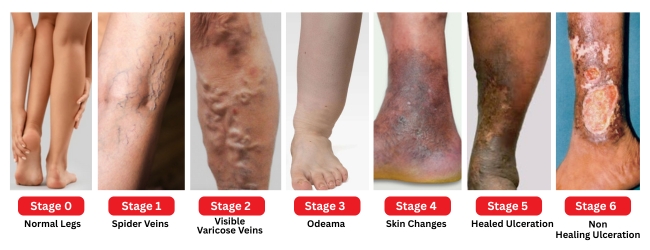
Common symptoms of varicose veins include
➤ Non-healing ulcers
➤ Swollen, twisted, or bulging veins
➤ Leg pain, heaviness, and throbbing sensation
➤ Skin discoloration and itching
➤ Muscle cramps and burning sensation
➤ Worsening pain after prolonged standing
Book Through Call
- +91 8019434242
Visit us
- Dr Saiteja Namala
- Medicover Hospital, Hi-Tech City
Causes:
➤ Weak or damaged vein valves
➤ Genetic Predisposition
➤ Prolonged standing or sitting
➤ Pregnancy and hormonal changes
Why Choose Us
Treatment For Varicose Veins
Usually, varicose veins might not require special treatment unless they are severe. But don’t ignore the condition. Consult a doctor and take basic treatment. They might also suggest some home remedies to reduce discomfort.
However, our expert doctor mentioned some of the common treatment options for this condition:
Self-care: Unfortunately, there is no preventive treatment to stop new veins from becoming varicose. But self-care can help to ease discomfort and prevents the varicose veins’ condition from becoming severe
➤ Exercising regularly
➤Losing excess weight
➤Stop wearing tight-fitting clothes
➤Elevating your legs while sleeping
➤Avoid standing or sitting for a long time
The above home remedies can ease pain and prevent the condition from worsening.
Compression stockings: Most of the doctors suggest wearing compression socks(stockings) all day long as the first line of treatment before moving to other treatments. These socks exert pressure on your legs and help to flow back the blood to your heart. They also reduce swelling.
The compression level varies, and you should use the compression stockings as recommended by the doctor. These compression stockings are available in medical supply stores and pharmacies.
Other Treatments For Severe Varicose Veins
If the condition doesn’t respond to self-care treatment or if it is worsening, one of the below varicose vein treatments might be suggested:
Sclerotherapy: In this procedure, a chemical solution or foam is injected into small varicose veins. The solution scars and closes the veins to stop the transportation of blood. The chemical might be injected more than once in the same vein.
Foam sclerotherapy of large veins: large varicose veins can also be closed by injecting foam solution. Sclerotherapy gives effective results if done correctly.
Radiofrequency Ablation: In this procedure, a thin tube called a catheter is inserted into the varicose vein, and the tip of the catheter is heated by either radiofrequency or laser energy. The heat destroys and closes the vein when pulled out. This procedure is mostly preferred to treat large varicose veins.
Laser Treatment:
It is a new technology to seal varicose veins and spider veins. A high energy light beam is focused onto the vein, which makes it fade and disappear gradually. Multiple treatment sessions are required and used to treat the small varicose veins. technology to seal varicose veins and spider veins. A high energy light beam is focused onto the vein, which makes it fade and disappear gradually. Multiple treatment sessions are required and used to treat the small varicose veins. technology to seal varicose veins and spider veins. A high energy light beam is focused onto the vein, which makes it fade and disappear gradually. Multiple treatment sessions are required and used to treat the small varicose veins.
Introducing Glue Treatment:
A Modern Solution for varicose veins:
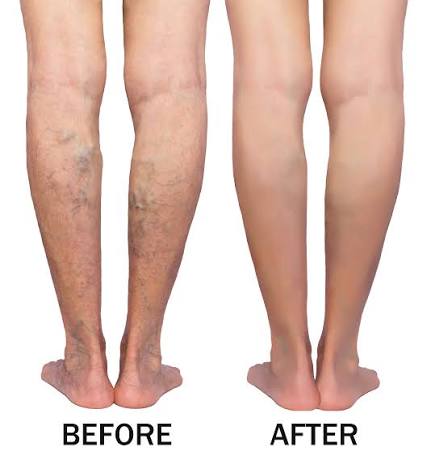
The VenaSeal treatment, a modern and minimally invasive procedure, uses a medical-grade adhesive to close off varicose veins. This special glue, known as cyanoacrylate, is applied directly to the affected vein through a catheter
Advantages of VenaSeal:
Less painful: Venaseal is often considered less painful than laser treatment, as it doesn’t require heat or thermal energy.
Faster procedure: Venaseal typically takes less time to perform than laser treatment, with procedures often lasting around 30 minutes.
No risk of thermal damage: Unlike laser treatment, Venaseal doesn’t use heat, eliminating the risk of thermal damage to surrounding tissues.
Less risk of nerve damage: Venaseal has a lower risk of nerve damage compared to laser treatment.
Immediate closure: Venaseal provides immediate closure of the vein, whereas laser treatment may require multiple sessions.
Efficacy and Durability:
High success rate: Venaseal has been shown to have a high success rate, with studies demonstrating closure rates of up to 95%.
Durable results: Venaseal has been shown to provide durable results, with many patients experiencing long-term closure of the treated vein.
Reduced Recovery Time:
Less bruising: Venaseal tends to cause less bruising compared to laser treatment.
Less swelling: Venaseal often results in less swelling and inflammation.
Faster return to normal activities: Patients can typically return to their normal activities sooner after Venaseal treatment.
Other Considerations:
Cost-effective: Venaseal may be more cost-effective than laser treatment, especially for larger veins.
Wide range of applications: Venaseal can be used to trate a wide range of vein sizes and types.
